How Proper Attic Insulation Prevents Ice Dams on Flagstaff Roofs
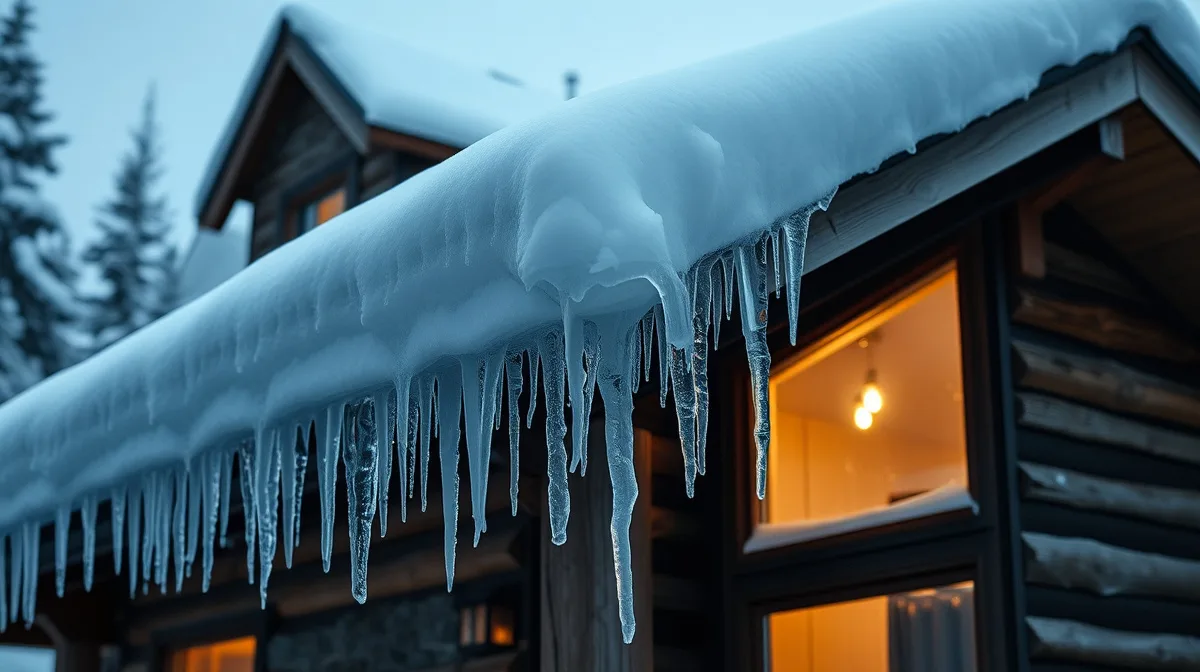
Every winter, Flagstaff roofs grow thick ridges of ice along the eaves — sometimes with icicles hanging two or three feet down, sometimes with water actively backing up under the shingles and dripping into a ceiling below. Most homeowners treat this as a roofing problem or just bad luck with the weather. It's neither. An ice dam is what happens when an attic is leaking heat, and the fix that actually works has almost nothing to do with the roof itself — it starts with how the attic is insulated and air-sealed.
What Actually Causes an Ice Dam
Ice dams form through a simple three-step cycle, and understanding it is the key to stopping it. It starts underneath the roof, not on top of it. Heat from the living space below rises into the attic — through can lights, attic hatches, top plates, plumbing stacks, and any gap in the ceiling's air barrier. That warm air raises the temperature of the underside of the roof deck well above freezing, even when the outside air is well below it. Snow sitting on that warmed section of roof melts from underneath, runs down under the snowpack toward the eave, and hits the overhang — the part of the roof that sits past the exterior wall, with no warm attic below it to keep it above freezing. There, the meltwater refreezes. Do that every day of a Flagstaff winter and the ice keeps building layer by layer until it forms a dam thick enough to back water up under the shingles and into the wall or ceiling below.
- Step 1 — Heat escapes from the living space into the attic through air leaks and under-insulated ceiling areas.
- Step 2 — That heat warms the roof deck from below, melting the bottom layer of snow even in freezing outside temperatures.
- Step 3 — Meltwater runs down to the cold, unheated eave overhang and refreezes, building an ice dam that can force water back under the roofing.
Why Flagstaff Roofs Are Especially Exposed to This
This isn't a theoretical risk in Flagstaff — it's a near-guaranteed one without the right attic assembly. Flagstaff sits at nearly 7,000 feet in IECC Climate Zone 5B, with roughly 90 to 108 inches of snow in a typical winter. That's more snow sitting on more roofs for more consecutive weeks than almost anywhere else in Arizona. A roof with a lot of standing snow and even a modest amount of attic heat loss has every ingredient it needs to run the melt-refreeze cycle for weeks at a stretch. Flagstaff's building code reflects how serious this is: the local 2018 IECC amendments call for attic insulation up to R-49, well above older statewide minimums, specifically because a leaky, under-insulated attic in this climate doesn't just waste heating dollars on APS bills — it actively drives ice dam formation on the roof above it.
The Fix That Actually Works: Sealing the Attic at the Source
The only way to reliably stop an ice dam is to stop the attic from leaking heat into the roof deck in the first place — and that means air-sealing, not just adding more loose material on the attic floor. Fiberglass batts and blown cellulose can add R-value, but they don't stop air movement; warm, moist household air still finds its way around and through them, still reaches the underside of the roof deck, and the melt-refreeze cycle keeps running. Closed-cell spray foam applied directly to the underside of the roof deck does two things fiberglass and cellulose cannot: it insulates at roughly R-6 to R-7 per inch, and it forms a continuous air barrier in the same application. Open-cell foam is sometimes used in the same conditioned-attic assembly for interior partitions or where a vapor-permeable layer is preferred. Either way, the goal is the same — bring the attic itself into the home's thermal and air boundary so the roof deck stays close to outdoor temperature across its full surface, not just at the eaves.
Why Heat Cables and Roof Raking Don't Fix the Real Problem
Heat cables (the zig-zag electric cables installed along eaves and in gutters) and manual roof raking after a storm are the two most common responses to ice dams, and they're both band-aids. Heat cables melt a channel through existing ice so water has somewhere to drain, but they run on electricity all winter, they do nothing about the attic heat loss creating the ice in the first place, and they need to be reinstalled or repaired most seasons. Roof raking pulls snow off the lower few feet of roof so there's less material to melt and refreeze, but it requires someone getting on a ladder after every significant snowfall, it only addresses the eave — not the underlying heat loss — and it carries real risk of falling, ladder damage, or gouging shingles with the rake.
- Heat cables treat the ice, not the heat loss — and add an ongoing electric cost.
- Roof raking is manual, seasonal labor with fall-risk and shingle-damage risk, repeated all winter.
- Neither approach touches the attic air leaks or R-value driving the melt-refreeze cycle.
- Both need to be repeated indefinitely, while air-sealed spray foam is a one-time attic upgrade.
What This Looks Like in a Flagstaff Attic
A proper ice-dam-focused attic retrofit starts with an assessment of how the current attic is built and ventilated — vented attics and conditioned (unvented) attics are handled differently, and mixing approaches without a plan can trap moisture instead of solving anything. In many Flagstaff retrofits, the target is a fully conditioned attic: spray foam applied to the roof deck and gable ends brings the attic inside the building's thermal envelope, closing off the vents that would otherwise pull outside cold air across an insulated attic floor. In other cases, sealing and foaming the attic floor plane along with dedicated air-sealing at penetrations — can lights, hatches, plumbing and duct chases — gets the job done while keeping a traditional vented attic. Either way, the target R-value for a Flagstaff attic under the local code amendments is R-49 to R-60, and typical attic spray foam projects here run in the $2,500 to $7,500 range depending on attic size and the target R-value, with a free on-site assessment being the only way to get a firm number for a specific roof.
Stop the Cycle Before Next Winter
Ice dams are a symptom. The attic is the cause. If your Flagstaff home has grown ice dams in past winters, or you've noticed cold spots or icicles that keep coming back no matter how many heat cables or rakes you throw at it, the fix is a properly air-sealed attic — not another temporary patch. Call 844-967-5247 or email josh@contractorschoiceagency.com for a free on-site assessment of your attic's current insulation and air-sealing, and a firm quote before next winter's snow starts piling up.
Frequently asked questions
When an attic is properly air-sealed with spray foam so the roof deck stays close to outdoor temperature across its whole surface, there's no warm spot left to generate meltwater under the snowpack — which removes the mechanism that builds ice dams in the first place. Existing ice from a prior storm still has to melt off naturally, but the cycle that keeps rebuilding it stops.
Snow sitting in gutters and on eaves is normal and isn't itself the problem — ice dams form when melted snow refreezes there because the roof above was warm enough to melt it. Once the roof deck runs closer to outdoor temperature end to end, gutters and eaves mostly just hold snow rather than growing ice ridges.
In most cases this is an attic-side fix, not a roofing job — spray foam is applied to the roof deck or attic floor from inside the attic. Depending on whether your attic is currently vented or unvented, a contractor may recommend closing off existing vents as part of converting to a fully conditioned attic assembly, but shingles and roof deck usually stay untouched.
Heat cables melt a drainage channel through ice that's already forming, but they run on electricity all season and do nothing about the attic heat loss causing the ice. Air-sealed attic insulation addresses the root cause, and most homeowners can retire the heat cables — or keep them as a minor backup — once the attic is properly sealed.
Ready for a free quote?
Tell us about your home and we'll build a clear, no-pressure quote.