Rim Joist & Band Joist Insulation
The rim joist band running around your foundation is one of the biggest sources of cold floors and winter drafts in Flagstaff homes — and one of the easiest to fix right with closed-cell spray foam.
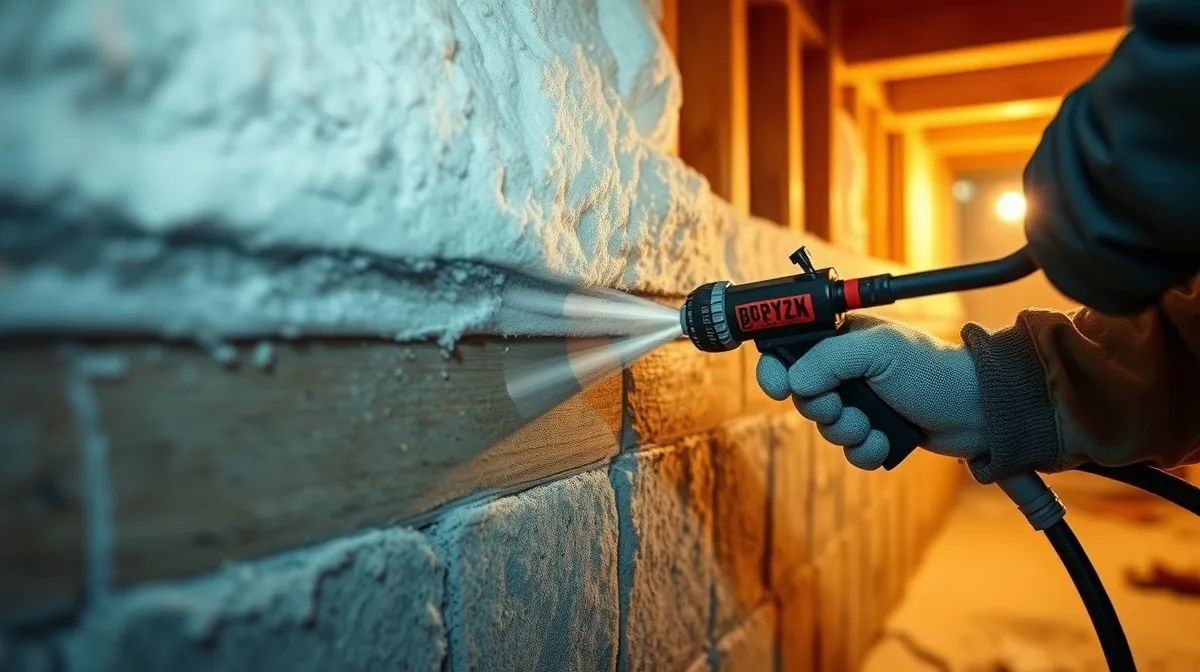
If you've ever noticed a cold strip of flooring near an exterior wall, or felt a draft along the baseboards on a sub-freezing Flagstaff morning, there's a good chance the rim joist is the culprit. This is the band of framing that sits on top of your foundation wall and supports the floor system above it — and in most homes built to older or minimum-code standards, it's wrapped with nothing more than a few scraps of fiberglass batt, or nothing at all. At nearly 7,000 feet elevation, with Flagstaff routinely seeing sustained stretches below freezing and 90 to 108 inches of snow a year, that gap isn't a minor comfort issue. It's a direct path for conditioned heat to leak out and cold air to leak in, night after night, all winter long.
Fiberglass batts can't solve this assembly the way it needs to be solved, because the rim joist isn't really an insulation problem first — it's an air-sealing problem. Batts get stuffed into an irregular, penetration-heavy cavity full of joist bays, wiring holes, and plumbing stacks, and they don't conform to the gaps around them, so air keeps moving straight through. Closed-cell spray foam expands to fill every irregular void, bonds to the wood framing and sill plate, and creates a continuous air barrier in the same step it adds R-value — commonly R-6 to R-7 per inch. For homes with unconditioned crawl spaces or basements below grade, this single assembly upgrade is often one of the most cost-effective heat-loss fixes we install anywhere in a Flagstaff home.
Why homeowners choose it
- Closed-cell foam air-seals and insulates the rim joist band in a single application, closing the gaps that fiberglass batts leave behind.
- Warmer floors above crawl spaces and basements make living spaces noticeably more comfortable during sustained sub-freezing stretches.
- Reducing rim joist air leakage cuts one of the most direct paths for heated indoor air to escape, easing the load on your heating system through a long Flagstaff winter.
- Closed-cell foam's high moisture resistance helps protect untreated framing at the sill plate from snowmelt and condensation intrusion.
- Sealing this assembly reduces drafts felt near baseboards and floor edges on the home's perimeter, especially in older or minimum-code construction.
- A properly sealed rim joist supports the rest of your insulation upgrades — attic, wall, or crawl space work performs better once this commonly-missed gap is closed.
Why the Rim Joist Is a Bigger Deal at 7,000 Feet
The rim joist band is structurally awkward for insulation: it's a narrow, penetration-heavy cavity where the floor framing meets the foundation, often interrupted by joist ends, wiring, and plumbing runs. In a mild climate, a gap here is an inconvenience. In Flagstaff's IECC Zone 5B climate, with real winters and genuine snow load, it's a consistent source of heat loss that runs the full perimeter of the house. Cold air infiltrating at the rim joist doesn't stay contained to the crawl space or basement — it works its way into the floor system and the living space above it, which is exactly why homeowners notice cold floors near exterior walls even when the room's air temperature reads normal on the thermostat.
Because this band sits at the transition between conditioned and unconditioned space, it's also one of the areas most likely to get skipped or under-insulated during original construction, particularly in homes built before Flagstaff's local cold-climate code amendments were in place. Fixing it isn't a cosmetic upgrade — it's closing a structural weak point in the building's air and thermal envelope.
How We Insulate and Air-Seal the Rim Joist
We apply closed-cell spray foam directly to the rim joist band, working it into the full depth of each joist bay so it bonds to the framing, sill plate, and foundation top plate rather than sitting loosely against them the way batt insulation does. Because the foam expands on contact, it fills irregular gaps around wiring, plumbing penetrations, and uneven framing that would otherwise leave a straight air path from outside to in. This is typically done as part of a crawl space or basement insulation project, but it can also be addressed as a standalone fix when the rest of the home's insulation is performing reasonably well and the rim joist is the identified weak point.
Closed-cell foam is the right material here specifically because of the assembly's exposure to potential moisture — sill plates near grade can see snowmelt and ground moisture intrusion, and closed-cell foam's low permeability helps protect the wood framing better than an open-cell product or unfaced batt would in the same location.
- Full joist-bay coverage — not just the exposed face of the rim board
- Foam bonds to framing, sill plate, and foundation top plate for a continuous seal
- Closed-cell density chosen for moisture resistance near grade
- Coordinates cleanly with crawl space, basement, or new-construction insulation work
What This Fixes — and What It Doesn't Replace
Rim joist sealing is a targeted fix for a specific, commonly-missed gap — it complements attic and wall insulation rather than replacing them. If your home has cold floors but a well-insulated attic and walls, the rim joist is often the missing piece. If multiple assemblies are underperforming at once, we'll walk the whole envelope during a free on-site assessment and tell you plainly where the priority is, rather than selling a single fix that won't move the needle on its own.
This is also a natural add-on for anyone already planning crawl space or basement work, since access to the rim joist band is usually already open during that project. Addressing it at the same time is typically far more cost-effective than returning for a standalone visit later.
Ideal for
- Homes with a cold floor along an exterior wall, especially over a crawl space or basement
- Older Flagstaff homes with original or minimum fiberglass batt insulation at the rim joist
- Homeowners doing a crawl space or basement insulation upgrade who want the full assembly addressed, not just the floor above
- New construction or major remodels aiming to meet or beat Flagstaff's amended 2018 IECC Zone 5B air-leakage standard
- Anyone chasing down a persistent draft or high APS heating bill that hasn't been explained by attic or wall insulation alone
What affects the cost
Rim Joist Insulation questions, answered
The rim joist, or band joist, is the framing band that sits atop your foundation wall and supports the floor system above it. In Flagstaff's Zone 5B climate, an unsealed or poorly insulated rim joist is a major source of cold floors and drafts because it sits directly at the boundary between conditioned and unconditioned space.
Batts don't conform to the irregular gaps around wiring, plumbing, and uneven framing in a rim joist bay, so air keeps leaking through even with insulation in place. Closed-cell spray foam expands to fill those gaps and air-seals as it insulates, which batts can't do.
If the rim joist is under-insulated or gapped, sealing it is often the single most effective fix for cold floors along exterior walls above a crawl space or basement. We'll confirm it's the right assembly to address during a free on-site assessment before recommending it.
It can be added to an existing home, and it's one of the more accessible retrofits available since the rim joist band is usually reachable from a crawl space or unfinished basement without major demolition.
Yes, whenever possible. Since access to the rim joist is typically already open during crawl space or basement insulation work, combining the two is usually more cost-effective than scheduling a separate visit later.
Rim Joist Insulation done right, by a local Flagstaff crew
Rim Joist Insulation isn't a commodity — the result depends entirely on how carefully it's planned and installed for your specific home and Flagstaff's real high-country climate. We assess what your house actually needs, prep and air-seal properly, and install to your elevation-appropriate R-value target, so the work delivers the comfort and savings it's supposed to.
We serve Flagstaff, Munds Park, Williams, Kachina Village, Mountainaire, Doney Park, Fort Valley, Bellemont, Parks, and Sedona. Every job starts with a free, no-pressure quote.
Just as important, we treat your home like the system it is. Insulation, air sealing, and ventilation all interact, and getting one right while ignoring the others leaves comfort and savings on the table. When we scope your rim joist insulation, we look at how it fits the whole picture — so the finished result performs the way it should, holds up through a genuine Flagstaff winter, and actually lowers the bills you feel every month.
Free assessment
We evaluate your home and give you a clear, itemized quote.
Expert install
We prep, air seal, and install your rim joist insulation to spec — clean and on schedule.
Savings you can feel
A warmer home, lower heating bills, and honest advice about what your home needs.
Related services
Ready for a free rim joist insulation quote?
Tell us about your home and we'll put together a clear, no-pressure spray foam insulation quote — built for Flagstaff's real winters.