Why Flagstaff's Elevation Demands Different R-Values Than Phoenix
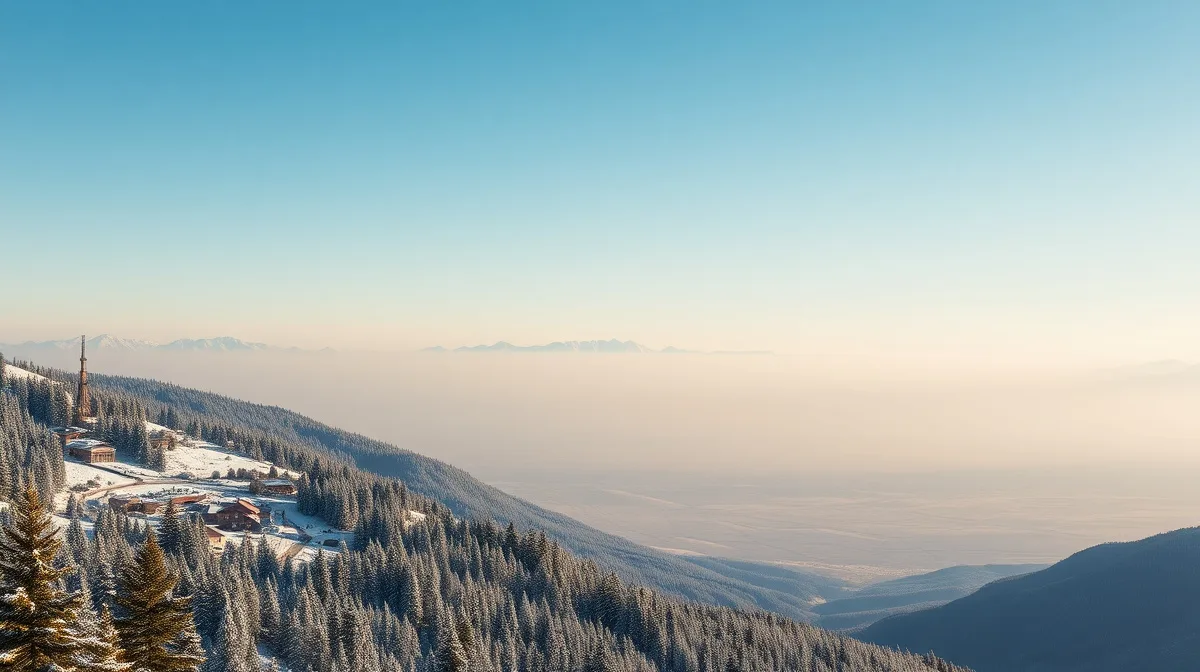
If you've searched "Arizona insulation R-value" and landed on advice written for Phoenix, throw it out. Flagstaff sits at nearly 7,000 feet in the San Francisco Peaks high country, and the building science here has almost nothing in common with the low desert 140 miles south. Phoenix homeowners insulate to keep summer heat out. Flagstaff homeowners insulate to keep winter heat in, through a real four-season climate that dumps 90 to 108 inches of snow most years. Same state, two different jobs, and two different codes to prove it.
Two Climate Zones, One State
The International Energy Conservation Code (IECC) doesn't treat Arizona as a single climate. It splits the state by elevation and temperature into distinct zones, and Flagstaff and Phoenix land in entirely different ones. Phoenix falls in IECC Climate Zone 2B, a hot-dry desert zone where the whole insulation strategy is built around keeping conditioned, air-conditioned indoor air separated from extreme outdoor heat for most of the year. Flagstaff is classified IECC Climate Zone 5B, a cold, dry mountain zone with the same kind of design priorities you'd find in parts of Colorado or northern New Mexico, not Tucson or Scottsdale.
That zone difference isn't a technicality. It's the reason code minimums for insulation thickness, air-leakage limits, and foundation detailing are all set higher in Flagstaff. A wall assembly, attic system, or crawl space that satisfies Zone 2B code in Phoenix would fail inspection in Flagstaff, because it simply wasn't designed to hold heat in against sustained sub-freezing stretches, heavy snow load, and the freeze-thaw cycling that defines a Flagstaff winter.
- Phoenix (IECC Zone 2B): hot-dry desert climate, elevation roughly 1,100 ft, design priority is keeping summer heat out
- Flagstaff (IECC Zone 5B): cold mountain climate, elevation nearly 7,000 ft, design priority is keeping winter heat in
- Flagstaff averages 90-108 inches of snow annually and is routinely cited as the snowiest incorporated city in Arizona
- Phoenix summers regularly exceed 100°F; Flagstaff summers are mild, typically 70s to low 80s°F
Flagstaff's Code Amendments Go Further Than the State Minimum
Flagstaff has adopted the 2018 IECC with local cold-climate amendments that push requirements noticeably above what a Phoenix-area builder deals with. These aren't suggestions from a contractor's sales sheet — they're the actual local code targets, and they exist because Flagstaff's elevation and snow load genuinely demand more insulation and tighter air control than the desert floor.
- Attic insulation: R-49 in Flagstaff versus R-38 in Phoenix
- Wall insulation: R-20+5ci (continuous insulation) in Flagstaff, a materially higher assembly than typical Phoenix wall requirements
- Air leakage limit (ACH50): 3.0 in Flagstaff versus 5.0 in Phoenix — Flagstaff homes must be built noticeably tighter against air infiltration
- Insulated foundations: R-15 continuous in Flagstaff, reflecting the need to protect against cold ground temperatures that Phoenix foundations never have to plan for
The ACH50 number deserves a second look because it's the one homeowners overlook most. ACH50 measures how many times the air inside a house exchanges with outside air per hour under standardized pressure testing — lower means tighter. A 3.0 limit in Flagstaff versus 5.0 in Phoenix means Flagstaff construction is required to control air leakage almost 40 percent more tightly. That's not a minor detail. Every gap, crack, and poorly sealed penetration in an attic or wall assembly is a path for expensive, furnace-heated indoor air to escape into a Flagstaff winter, and for cold outside air to infiltrate back in. Fiberglass batts and blown cellulose can hit an R-value on paper, but neither one air-seals. Spray foam insulates and air-seals in the same application, which is exactly the combination Flagstaff's tighter ACH50 requirement is written around.
Why "Arizona Insulation" Advice Falls Apart at 7,000 Feet
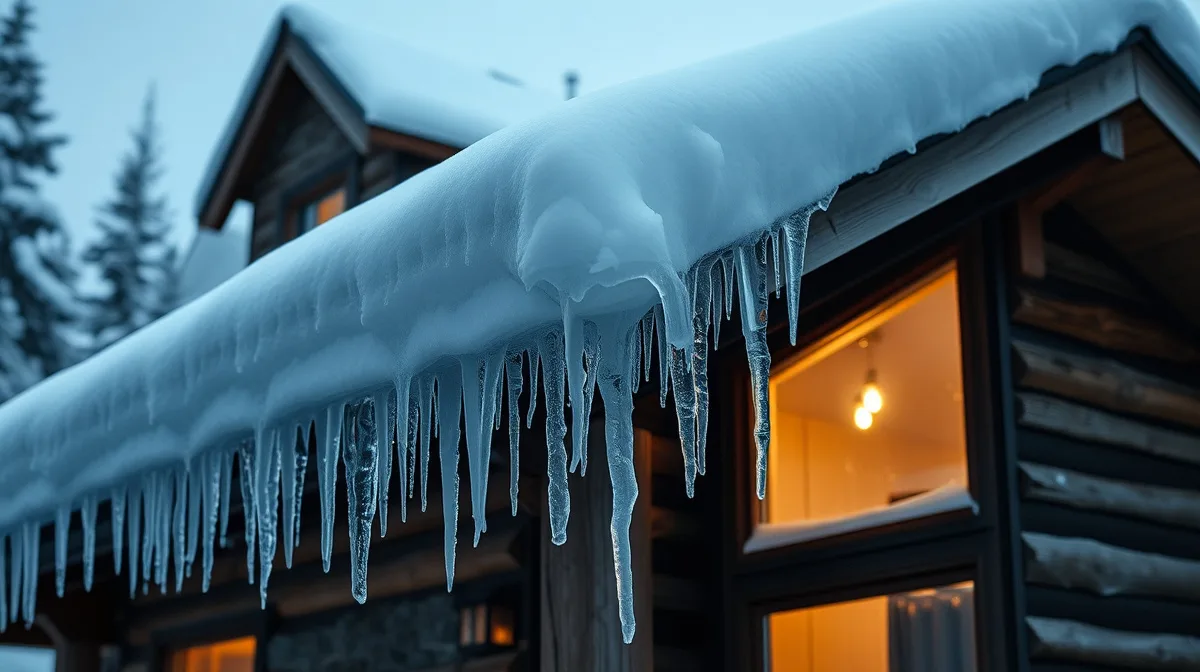
Most statewide insulation content gets written from a Phoenix-metro default, because that's where most of Arizona's population and most insulation contractors are based. That content talks about radiant barriers, attic ventilation for cooling, and knocking down summer AC bills — all legitimate advice for the low desert, and all beside the point in Flagstaff. Applying it here skips the actual problem: heat loss through an underinsulated, poorly air-sealed attic and roof deck, which in a snow climate doesn't just waste money on heating, it causes ice dams. Warm air escaping into the attic melts snow on the roof deck, that meltwater runs down to the colder eave overhang, and refreezes into ice that backs water up under shingles. Fiberglass and cellulose alone can't stop that cycle because they don't stop the air movement that drives it. A properly sealed spray foam attic system, sized to Flagstaff's R-49-60 target, addresses the actual local failure point rather than a desert-climate concern that doesn't exist up here.
What This Means for Your Home
If you own a home in Flagstaff, Munds Park, Williams, Kachina Village, Mountainaire, Doney Park, Fort Valley, Bellemont, or Parks, you're in the same genuinely cold, high-elevation service cluster where full Zone 5B targets apply. (Sedona, at roughly 4,500 feet, is milder and gets a lighter version of this framing — it's listed as a service area but doesn't carry Flagstaff's heavy-snow profile.) For everyone else at Flagstaff's elevation, the practical targets to ask any contractor about are attic insulation in the R-49-60 range, wall assemblies around R-20-21 (R-20+5ci), and crawl space insulation at R-30 or better, all backed by real air-sealing rather than insulation alone. Costs vary by home size and target R-value, with spray foam typically running $1.50 to $5.00 per square foot installed and whole-attic projects commonly landing between $2,500 and $7,500 — a free on-site assessment is the only way to get a firm number for your specific house.
Mild summers are a real perk of living at elevation, and a well-sealed home stays comfortable through those too. But the number that should drive your insulation decisions is your APS electric heating bill through a Flagstaff winter, not a Phoenix cooling bill. Elevation set the code. Elevation should set your insulation plan too.
Frequently asked questions
Building codes are set by climate zone, not by state. Flagstaff falls in IECC Climate Zone 5B, a cold mountain climate at nearly 7,000 feet, while Phoenix is IECC Zone 2B, a hot desert climate at roughly 1,100 feet. Flagstaff's local code amendments require higher attic and wall R-values along with tighter air-leakage limits than Phoenix, because the two cities are solving opposite problems.
Flagstaff has adopted the 2018 IECC with local cold-climate amendments calling for R-49 attic insulation, R-20+5ci wall assemblies, and R-15 continuous insulated foundations, along with an ACH50 air-leakage limit of 3.0. Phoenix's requirements are lower across the board, including an ACH50 limit of 5.0.
No. Most statewide insulation content is written from a Phoenix-metro, desert-heat perspective and focuses on cooling costs and summer AC savings. That framing doesn't apply at Flagstaff's elevation, where the priority is heating-cost savings, air-sealing, and ice-dam prevention through a genuine cold, high-elevation winter.
Ready for a free quote?
Tell us about your home and we'll build a clear, no-pressure quote.