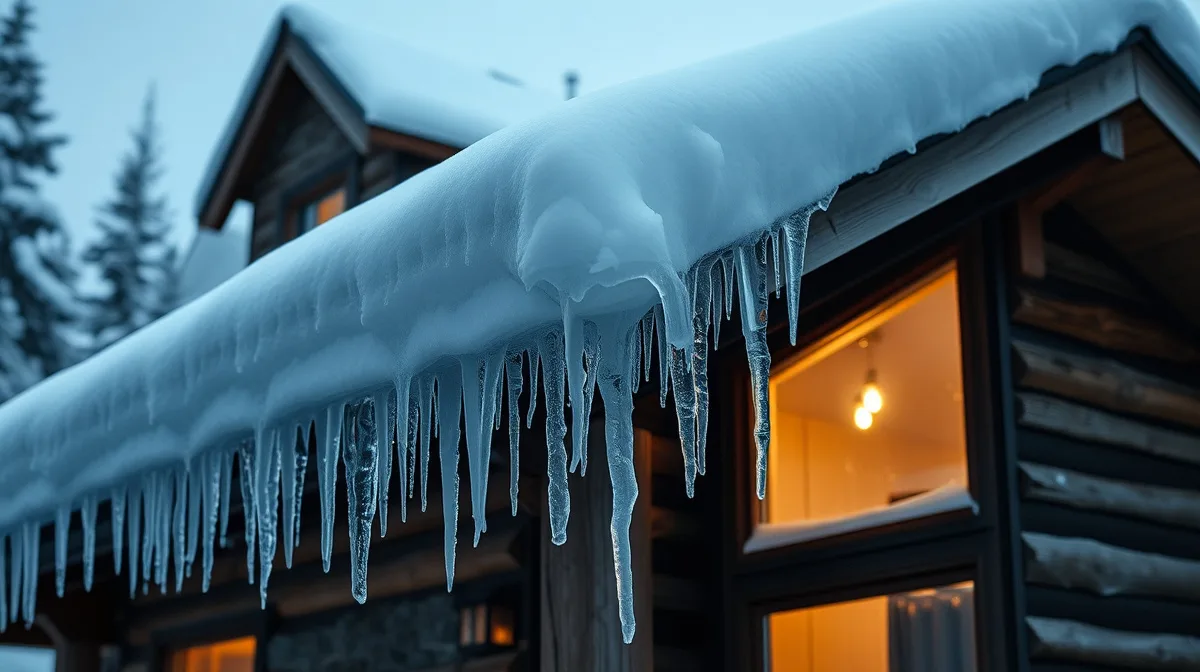
Open-Cell vs. Closed-Cell Spray Foam for Cold Climates: Which Is Right for Your Flagstaff Home?

Every spray foam conversation in Flagstaff eventually gets to the same fork in the road: open-cell or closed-cell? It's a fair question, and the honest answer is that neither one is universally "better" — they're built for different jobs. At almost 7,000 feet, in a climate the International Energy Conservation Code classifies as Zone 5B, the right answer depends heavily on where in the house you're insulating, how much framing depth you have to work with, and how much of that assembly has to double as a moisture barrier against snowmelt and ice.
This isn't a Phoenix insulation question with a Flagstaff address slapped on it. Phoenix contractors rarely think hard about vapor performance because the desert doesn't push moisture into wall cavities the way a heavy-snow mountain town does. Here, that distinction matters. Below, we'll break down both foam types on the metrics that actually decide the outcome in a cold, high-elevation assembly: R-value per inch, moisture and vapor behavior, and where each one earns its place in an attic, wall, rim joist, or crawl space.
R-Value Per Inch: The First Number That Matters
R-value per inch is where the two foams diverge most sharply, and it's the number that drives most of the rest of this comparison. Closed-cell spray foam delivers roughly R-6 to R-7 per inch — the densest, highest-performing insulation material available for residential and light-commercial work. Open-cell spray foam runs about R-3.5 to R-3.7 per inch, roughly half the R-value of closed-cell for the same thickness, though it's still a meaningful step up from fiberglass batts (R-2.9 to R-3.8 per inch in real-world installs, once you account for air gaps and settling) or blown cellulose (R-3.2 to R-3.8 per inch, and cellulose settles over time).
Flagstaff's local code amendments push R-value targets higher than almost anywhere else in Arizona: attic assemblies at R-49 to R-60, walls at R-20+5ci (R-20 in the cavity plus 5 continuous insulation), and crawl spaces at R-30 or better. In a 2x6 wall cavity, closed-cell foam can realistically hit that R-20 target within the framing depth. Open-cell foam, in the same 2x6 cavity, tops out closer to R-19-21 territory only if you fill the full depth — workable, but with zero margin and no contribution to the continuous-insulation ("ci") portion of the code target. That's the practical tradeoff: closed-cell buys you R-value in inches you don't have to spare; open-cell needs more of them.
Moisture and Vapor Performance in a Snow Climate
This is the category that gets skipped in generic "Arizona insulation" content, and it's arguably the most important one for a heavy-snow mountain town. Closed-cell spray foam has a closed cellular structure that makes it effectively impermeable to water and largely a vapor barrier in its own right at typical application thicknesses. That matters in assemblies where snowmelt, ice damming, or ground moisture can intrude — rim joists sitting above a crawl space, foundation walls, and any cavity exposed to seasonal freeze-thaw cycling. Closed-cell foam doesn't just insulate that assembly; it seals it against the moisture that would otherwise saturate fiberglass, rot framing, or feed mold growth over a Flagstaff winter.
Open-cell foam is a different animal. Its cell structure stays open, which means it's air-permeable to moisture vapor (though still an excellent air-sealant against bulk air movement). That vapor permeability is actually an advantage in some interior wall and roof-deck assemblies, where you want the structure to be able to dry in one direction rather than trapping moisture between two vapor-impermeable layers. But it's the wrong call anywhere snowmelt or standing moisture is a direct threat — a rim joist over an unconditioned crawl space, for instance, is not a place to gamble on a foam that absorbs and holds water rather than shedding it.
Where Each Foam Fits in a Zone 5B Assembly
Rather than picking one foam for the whole house, most Flagstaff projects end up using both — closed-cell where moisture and R-value-per-inch are non-negotiable, open-cell where interior air-sealing and sound control are the priority. Here's how that shakes out room by room and assembly by assembly.
- Attic (vented or unvented): Open-cell is common for interior attic ceiling planes and conditioned attics where you have full rafter depth to work with and want interior sound-dampening; closed-cell earns its keep on unvented roof-deck assemblies where a moisture-resistant air barrier at the sheathing matters most.
- Exterior walls (2x4 or 2x6): Closed-cell is generally the better fit given Flagstaff's R-20+5ci wall target — it hits code R-values within standard framing depth and adds real structural rigidity to the wall assembly.
- Rim joists and band joists: Closed-cell, without much debate. This is one of the highest heat-loss points in a Flagstaff home, sits directly above crawl spaces and foundations where moisture is a real factor, and benefits from foam that air-seals and moisture-seals in the same application.
- Crawl spaces: Closed-cell for foundation walls and rim joist transitions, where ground moisture and vapor drive from below are a constant. This aligns with the R-30+ crawl space target in Flagstaff's code amendments.
- Interior partition walls: Open-cell, primarily for sound-dampening between rooms — R-value and moisture resistance aren't the deciding factors here, so the lower-cost option does the job.
- Garage ceilings and shared walls: Closed-cell where the garage is unconditioned and sits below living space, since it's both an air-seal and a moisture-management layer against exterior exposure.
Cost, Density, and the Practical Tradeoffs
Closed-cell foam's performance comes at a cost. It's denser and pricier per board foot than open-cell, and installed costs across Flagstaff-area projects typically run in the $1.50 to $5.00 per square foot range, with open-cell landing at the lower end of that range and closed-cell at the higher end due to material density and R-value. Closed-cell also adds meaningful structural rigidity to a wall or roof assembly — a genuine side benefit in a climate that deals with real snow-load stress on roof framing, something open-cell doesn't offer to the same degree.
None of this means closed-cell is automatically the right call everywhere. Open-cell's lower cost and superior sound-dampening make it the practical choice for interior applications where moisture simply isn't a factor — using closed-cell there is often over-spending for performance the assembly doesn't need. The smartest approach, and the one we generally recommend on a Flagstaff project, is matching the foam to the assembly rather than defaulting to one type for the whole house. A free on-site assessment is the fastest way to get a firm recommendation and an accurate quote for your specific home, rather than guessing from a generic price range.
The Bottom Line for Flagstaff Homeowners
At nearly 7,000 feet, in a code climate that already demands more R-value than almost anywhere else in Arizona, the open-cell vs. closed-cell decision isn't cosmetic — it directly affects whether your rim joists stay dry, whether your walls hit code without stealing framing depth, and how well your roof handles a real Northern Arizona winter. Closed-cell earns its premium in moisture-exposed, R-value-critical assemblies: rim joists, crawl spaces, exterior walls, unvented roof decks. Open-cell holds its own in interior, conditioned cavities where air-sealing and sound control matter more than vapor resistance. Get both right in the same house, and you've built an assembly that actually matches how Flagstaff winters behave — not one borrowed from a desert-heat playbook.
Frequently asked questions
Yes, and it's common practice on Flagstaff projects. Many homes use closed-cell in moisture-exposed, R-value-critical areas like rim joists, crawl spaces, and exterior walls, while using open-cell in interior conditioned cavities where sound-dampening is the priority. Matching foam type to assembly usually delivers better performance than using one type throughout.
Not always — it's the better choice specifically where moisture exposure and R-value-per-inch are critical, such as rim joists, crawl spaces, and exterior walls. In fully interior, conditioned spaces where moisture isn't a factor, open-cell is a cost-effective option that still air-seals effectively and adds sound-dampening closed-cell doesn't prioritize.
Open-cell performs fine in the right location — it's an excellent air-sealant and works well in interior, conditioned cavities. The concern isn't cold temperatures directly; it's that open-cell's air-permeable structure isn't built to resist moisture intrusion, which is why it's not the recommended choice for assemblies exposed to snowmelt or ground moisture, like rim joists and crawl spaces.
Ready for a free quote?
Tell us about your home and we'll build a clear, no-pressure quote.